Colored Glass Chandeliers for Artistic Interiors
Let the light become part of your visual language. Model 5680 pairs green and red glass leaves in an expressive sculptural outline: a starting point for an art-led hotel, gallery salon or a home shaped by its owner’s collection. Explore fourteen distinctive designs through form, color and material, and choose a fitting that belongs to your own interior story.
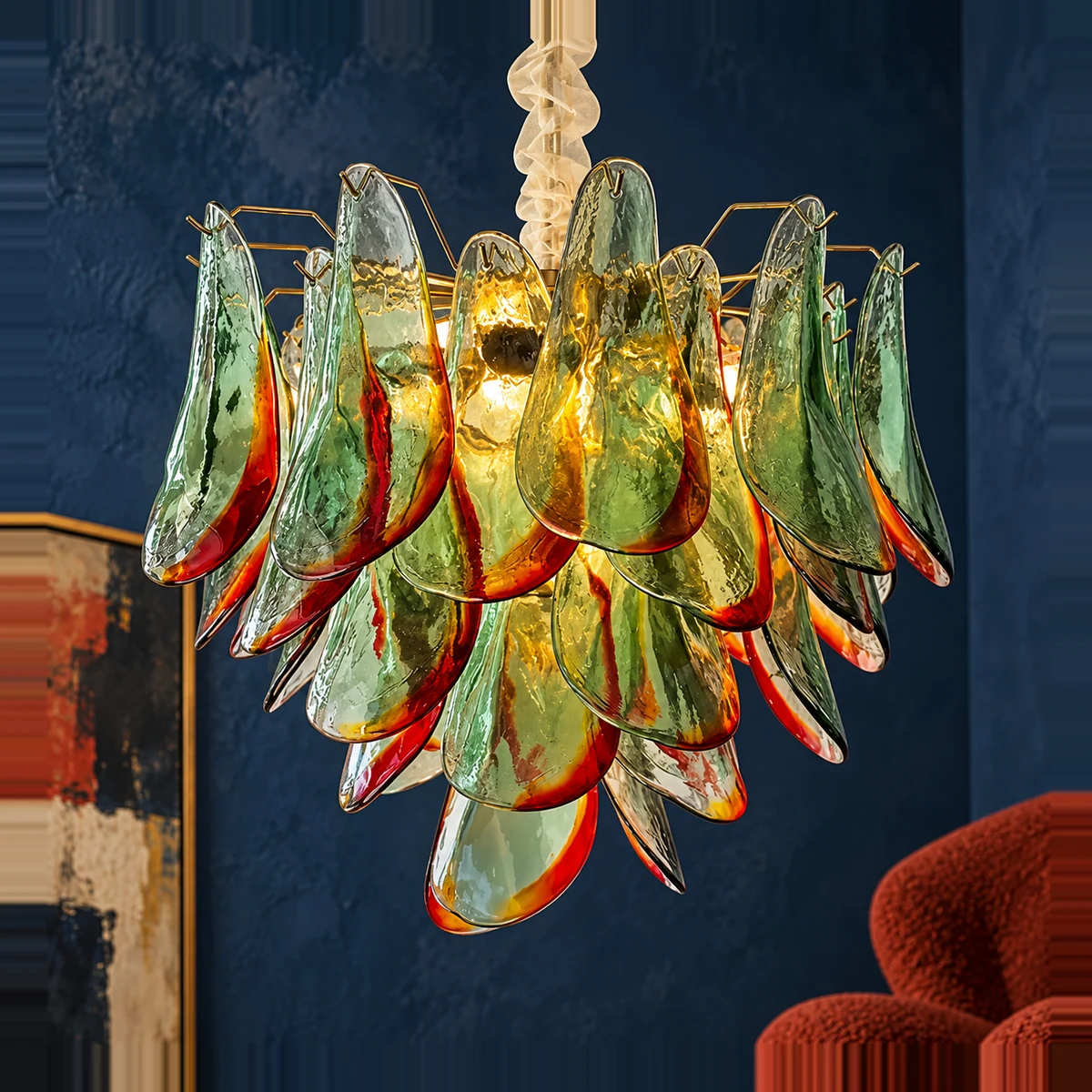
Choose a point of view, not a matching set
An artistic interior can feel collected rather than coordinated. A layered green disc, a pink linear composition or a spray of textured glass leaves each changes the room in a different way. Colored glass leads this collection, with two clearly identified resin designs adding an opaque, sculptural contrast. Consider the chandelier beside artwork, furniture and the colors that already carry personal meaning in the space.
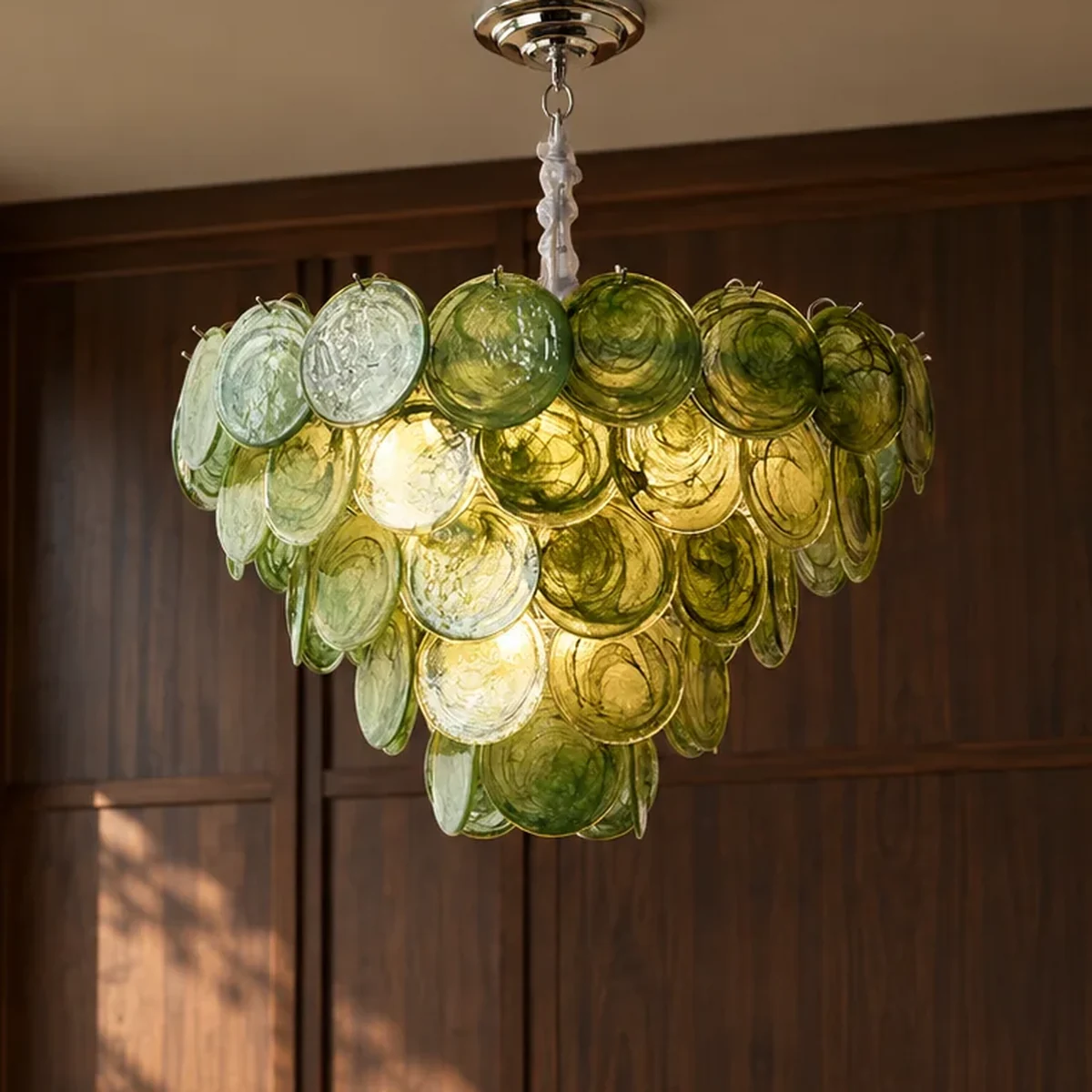
Pressed-glass discs · 5685
Overlapping dark-green discs give this design a rounded, tactile outline. The repeated circles can sit alongside a collection of ceramics, a strong textile or an art-deco influence without repeating the straight lines of a tubular fitting. Consider it in a collector’s salon, a boutique lounge or a creative studio’s reception corner.
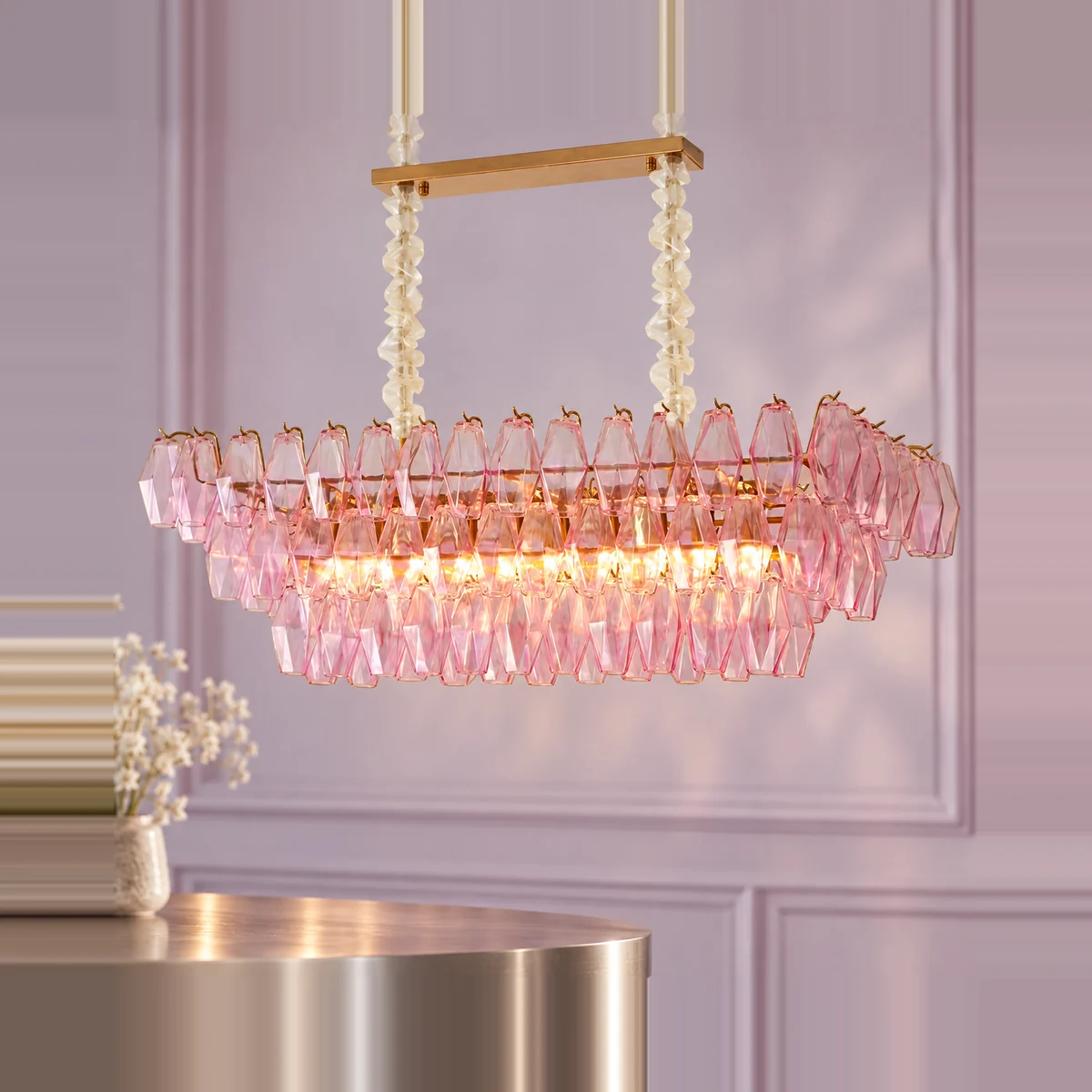
A pink line through the room · 5689 linear
Pink faceted glass is organized along a long horizontal body. It offers a different composition over a creative studio table, an intimate restaurant setting or a display island in an independent boutique. Compare the line of the fitting with the furniture below, and keep its linear version separate from round forms in the same source family.
Eight more designs with individual character
Compare eight distinct outlines and materials: vertical tubes, a stepped geometric body, a broad faceted form, a tall pink silhouette, round teardrops, open glass leaves and two sculptural resin options. Think about the contrast each could create with artwork, furniture and the surfaces around it.
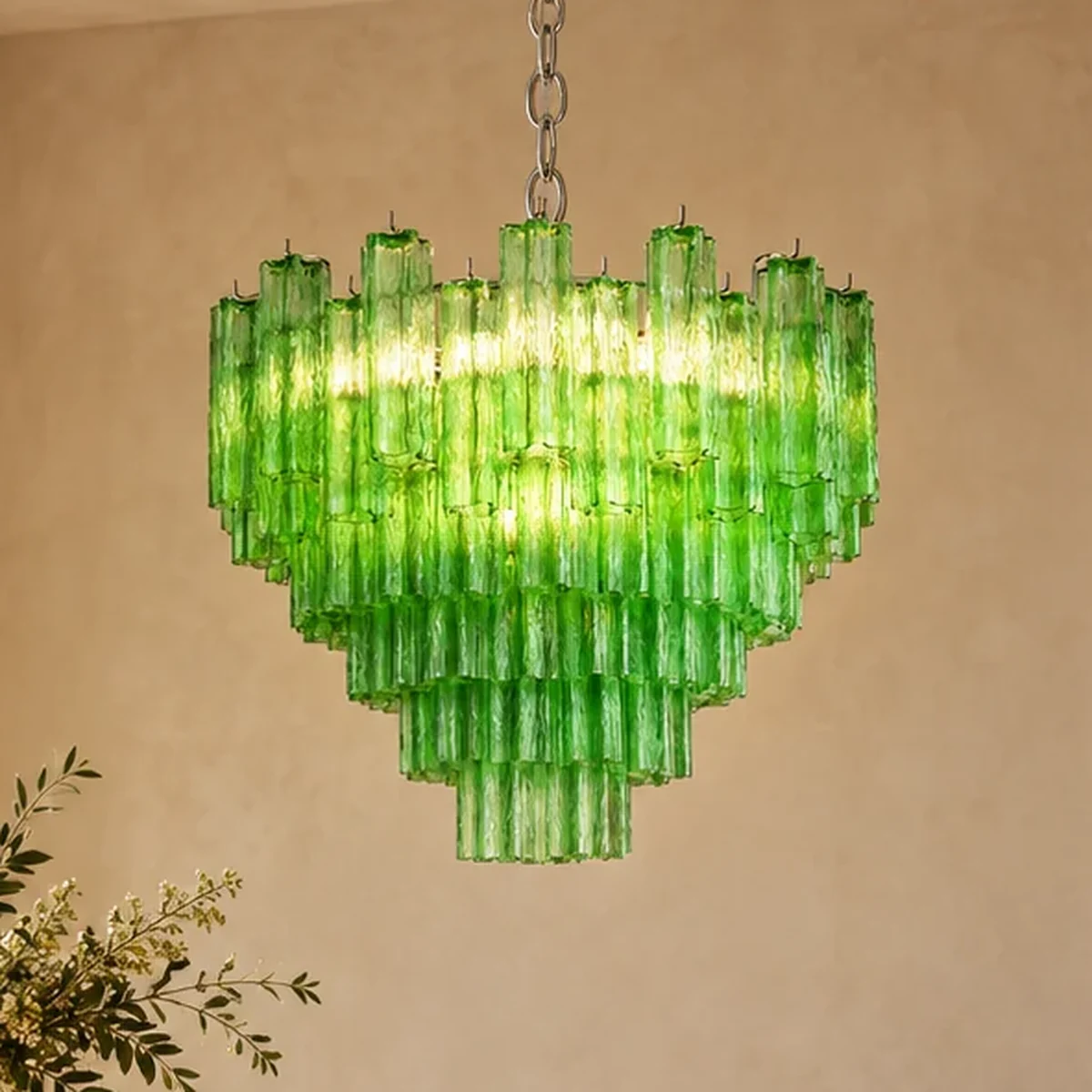
5683
Green Glass Tubes
A clear green color statement with a stepped tubular body. Consider the repeated vertical lines against artwork or a strongly textured wall.
5686
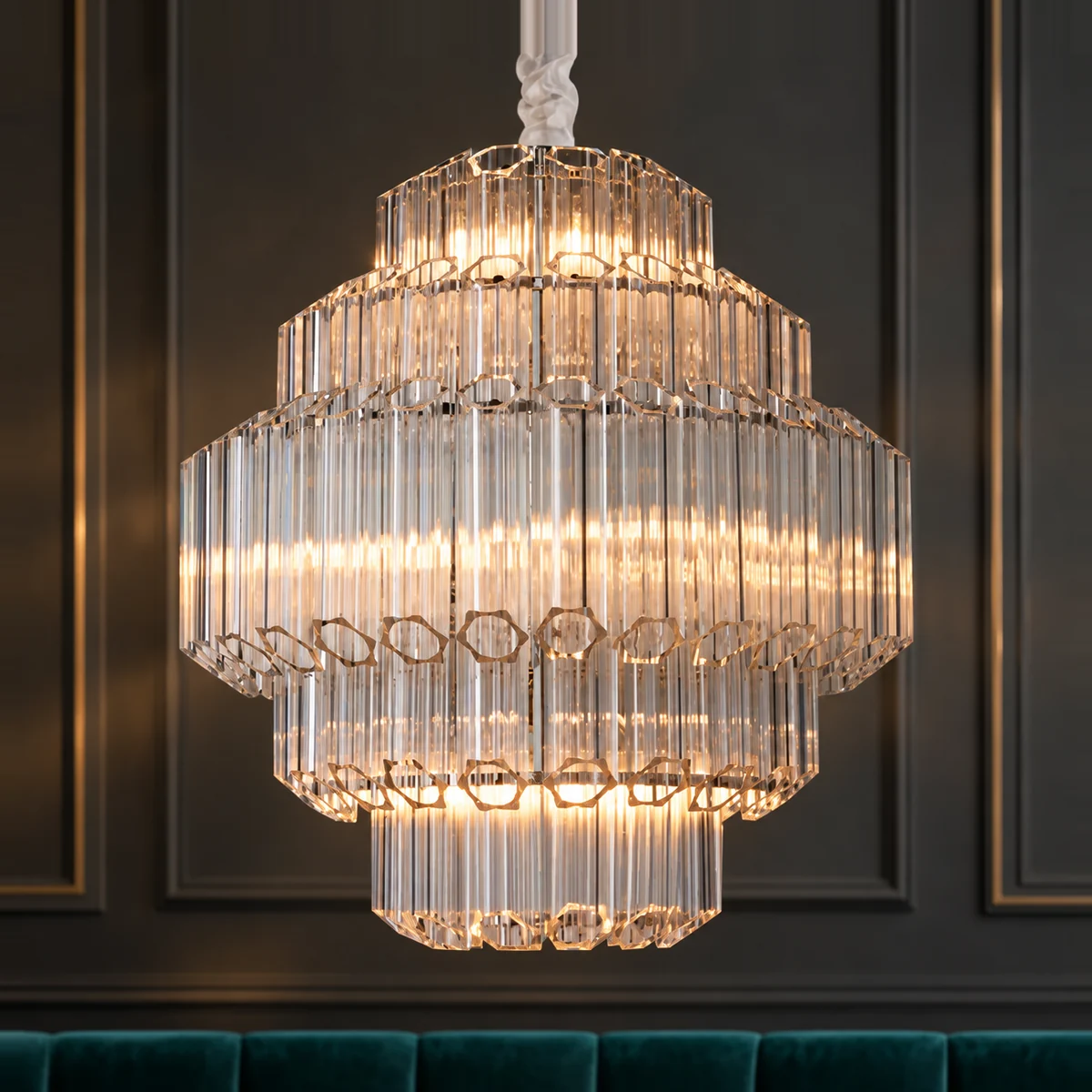
Art-Deco Glass Geometry
Angular clear-glass rods build a broad middle tier with narrower ends. A geometric alternative for a gallery lounge or an interior with graphic furniture lines.
5687
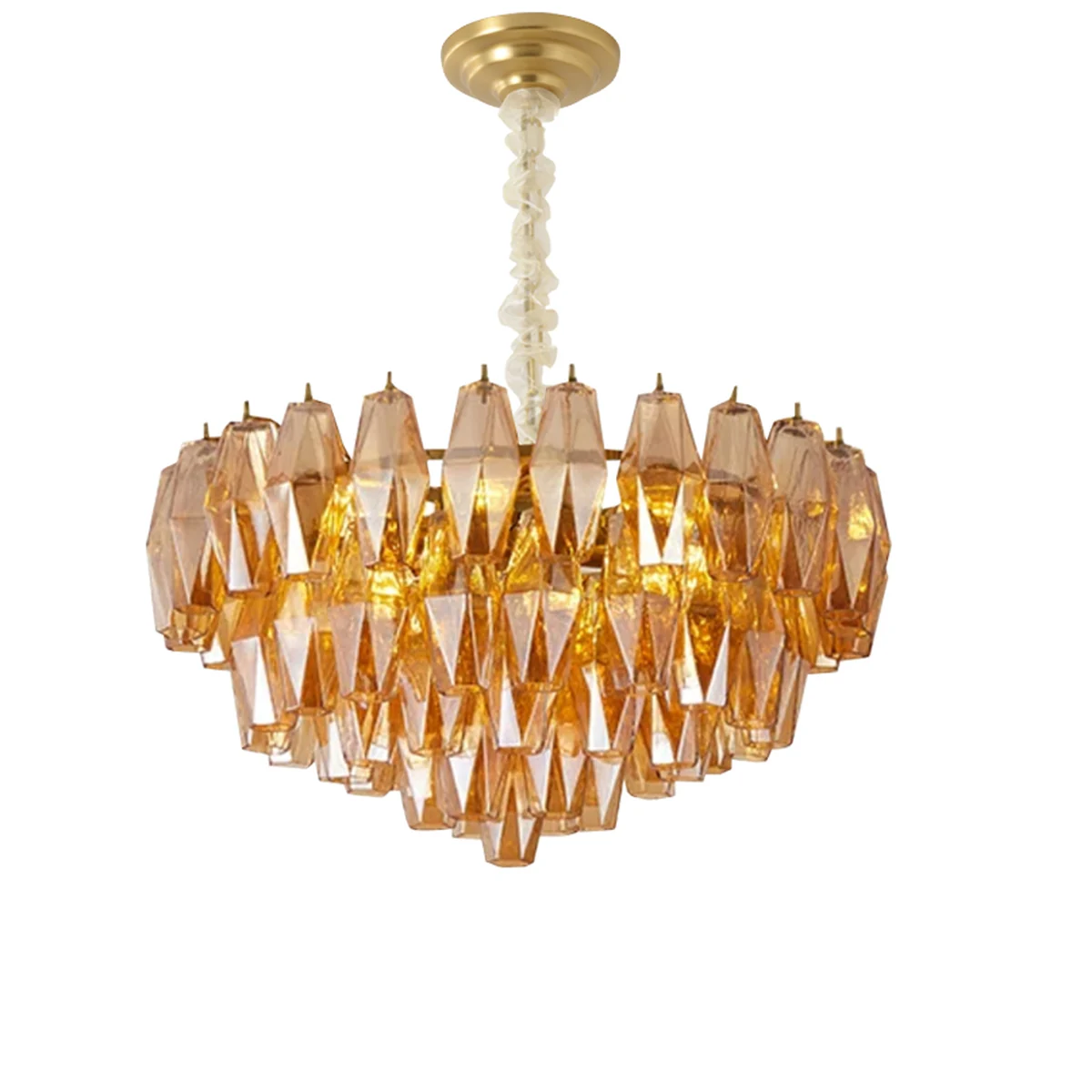
Amber Faceted Glass
A wider, relatively shallow faceted outline in amber. Compare its warm color with timber, painted surfaces and the objects collected around it.
5691
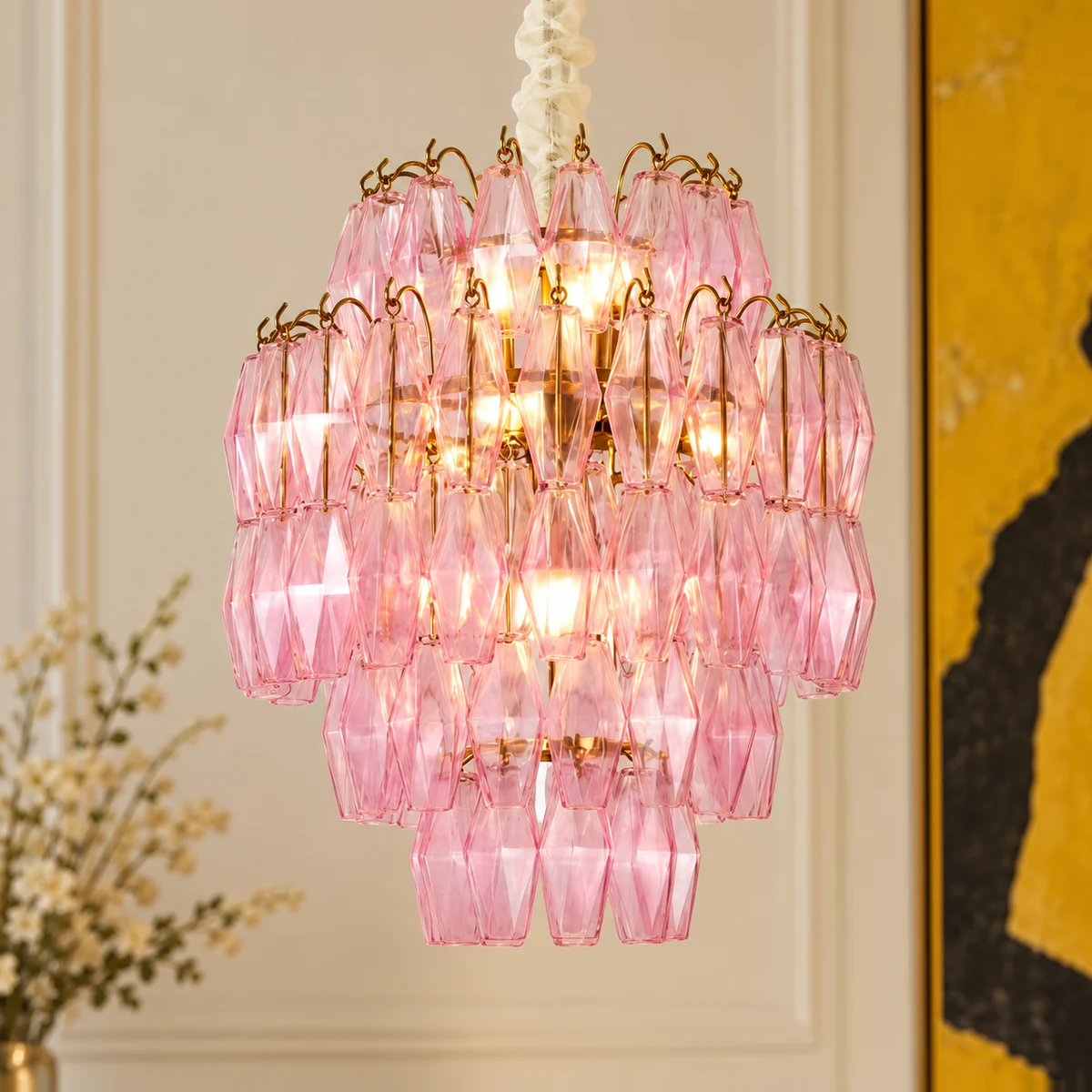
Tall Pink Glass
A more vertically developed pink body with faceted hanging elements. Review its depth and the complete drop before placing it in an artistic interior.
5692 · round
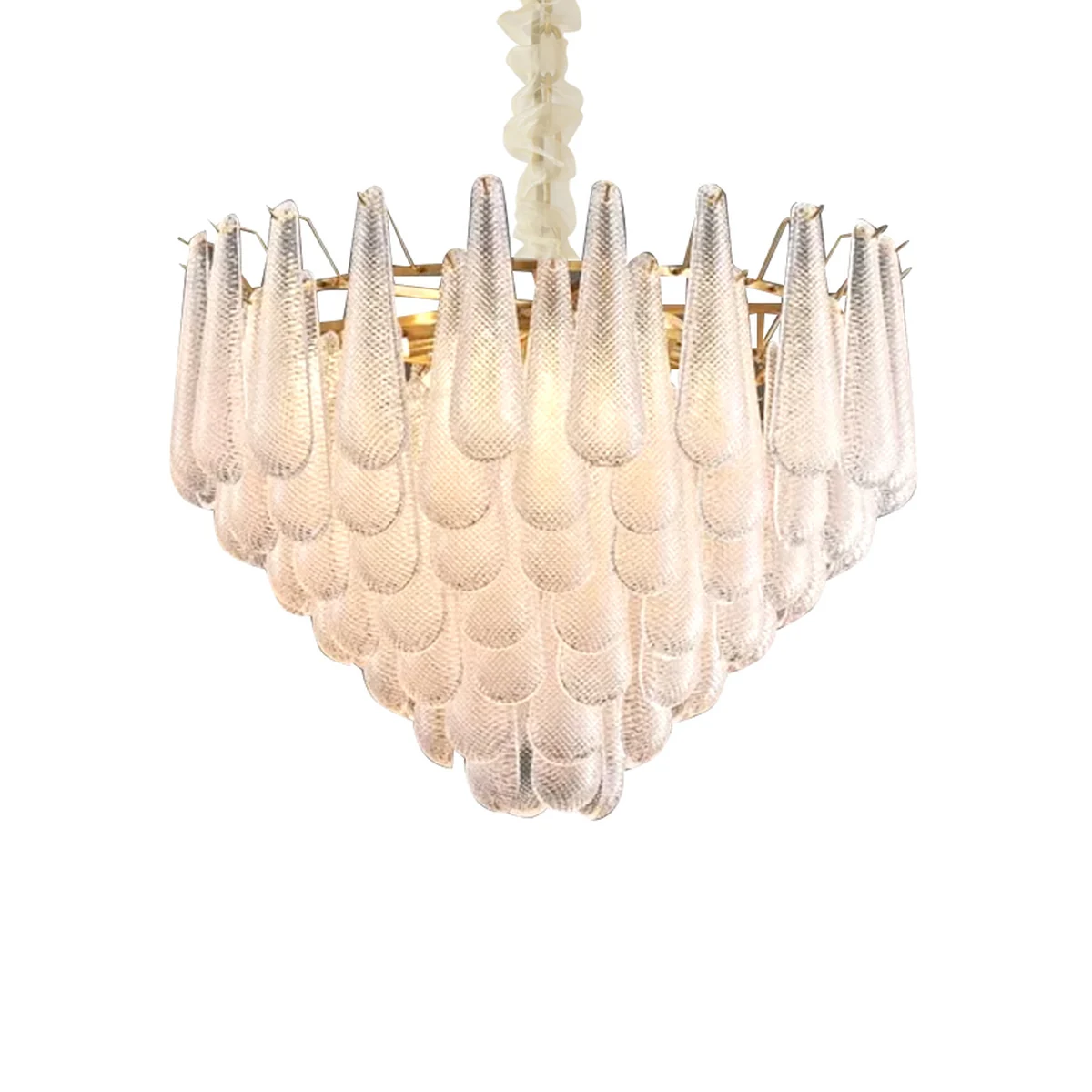
Rounded Teardrop Glass
Clear teardrop forms make a rounded composition. This is the round body, offering a different rhythm from a linear fitting above a long table.
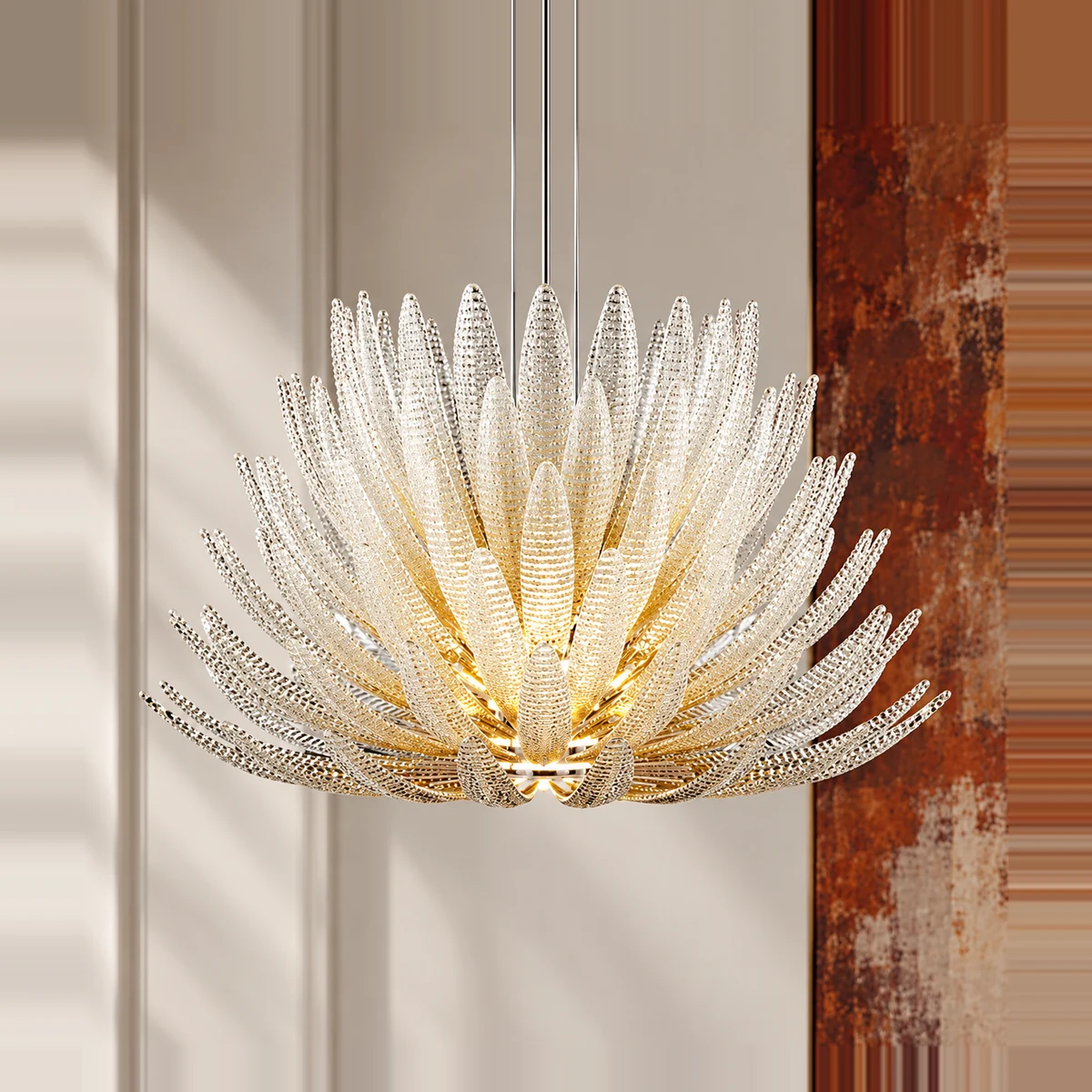
5694
Open Glass Leaves
Slender textured glass leaves sweep outward into an open sculptural form. A useful contrast to enclosed tiers in a gallery salon or design-led home.
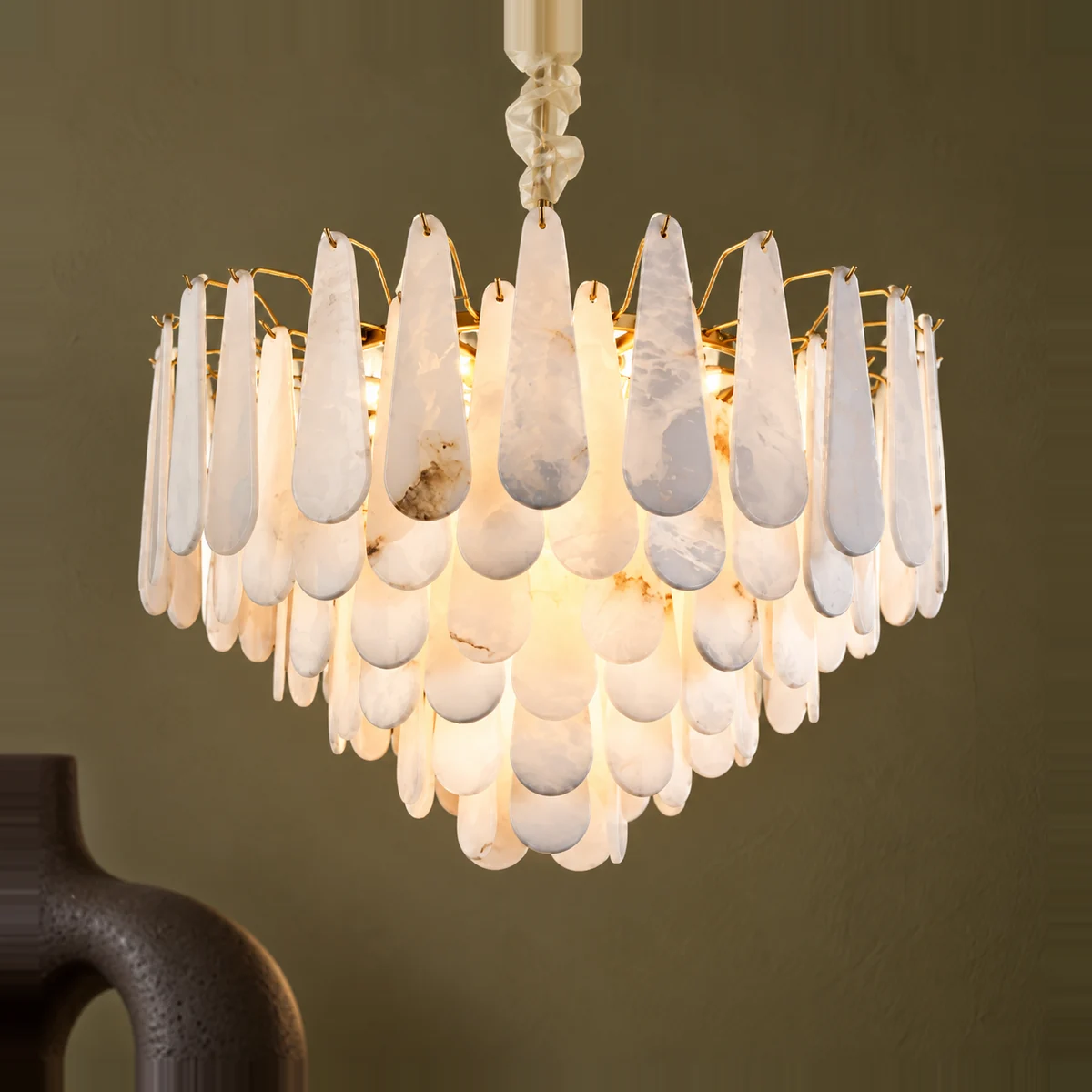
5697
Sculptural Resin Drops
Elongated cream resin elements introduce an opaque, softly veined surface. The documented material is resin, offering a different texture from translucent glass.
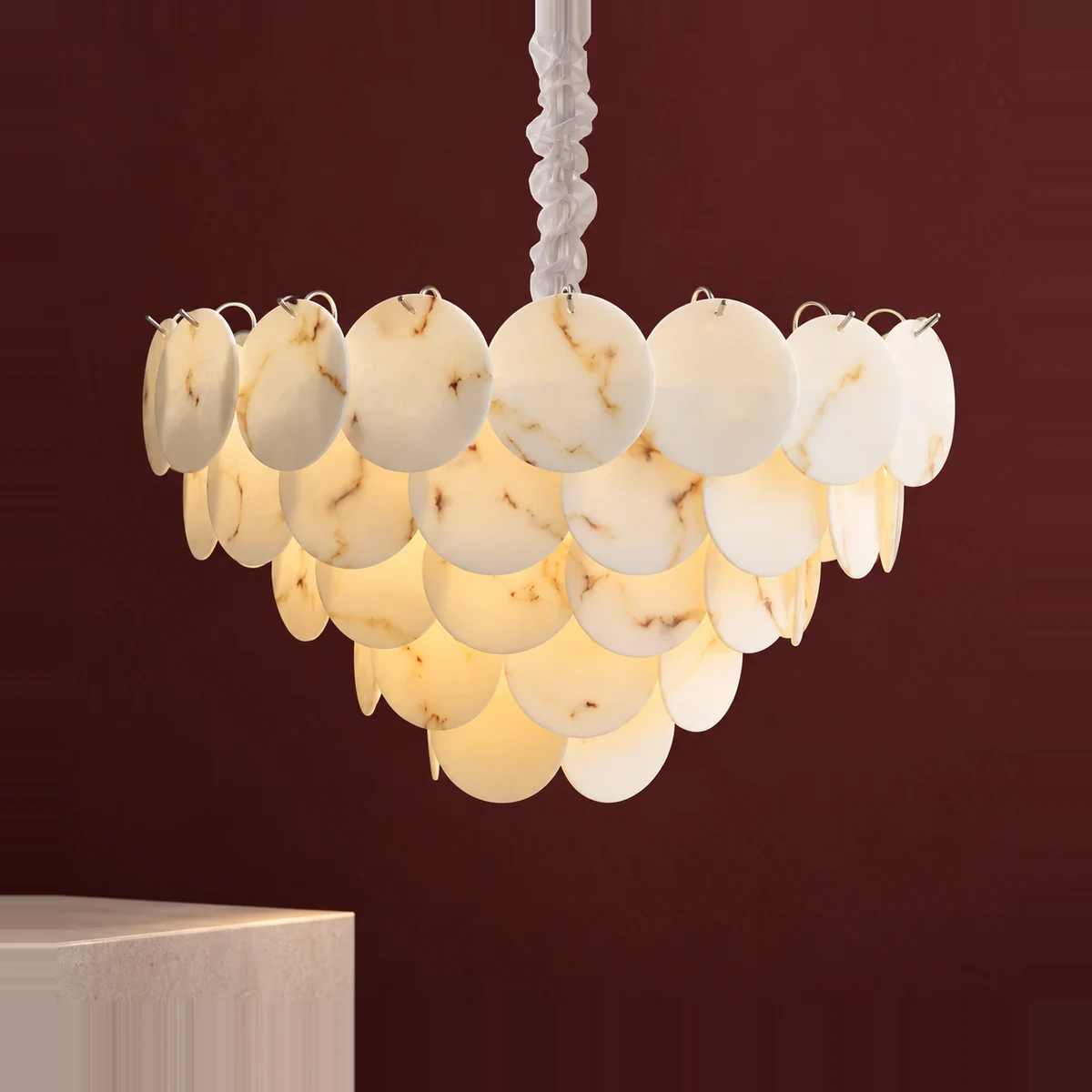
5698
Cream Resin Discs
Layered circular resin pieces create a quieter bowl-shaped silhouette. Compare it with darker walls, bold artwork or richly colored furniture.
Compare the sculptural envelope with the space
Artistic expression still needs a precise footprint. Record diameter or length, body height and the proposed hanging arrangement, then compare the outline with the artwork, furniture and sightlines around it. Body dimensions and visual styling scenes do not establish the complete installed drop or the amount of light delivered.
Public-facing creative interiors
For an art-led hotel, gallery lounge, independent boutique or studio reception, choose one clear relationship with the interior: color, geometry or material. A visual focal point should be assessed alongside the wider lighting scheme, ceiling support and access for maintenance.
Personal spaces and collected interiors
In a collector’s living room, an eclectic dining area or a private creative studio, begin with the objects and colors that matter to the owner. A quieter finish can support a strong artwork, while a colored glass body can become an intentional accent. Confirm the exact version instead of relying on the apparent size in a photograph.
Three further forms, with reference specifications
These are three additional designs, separate from the ones shown above. The dimensions refer to the stated body version and exclude an unconfirmed suspension. Their different proportions illustrate why a color choice should also include a size and material check.
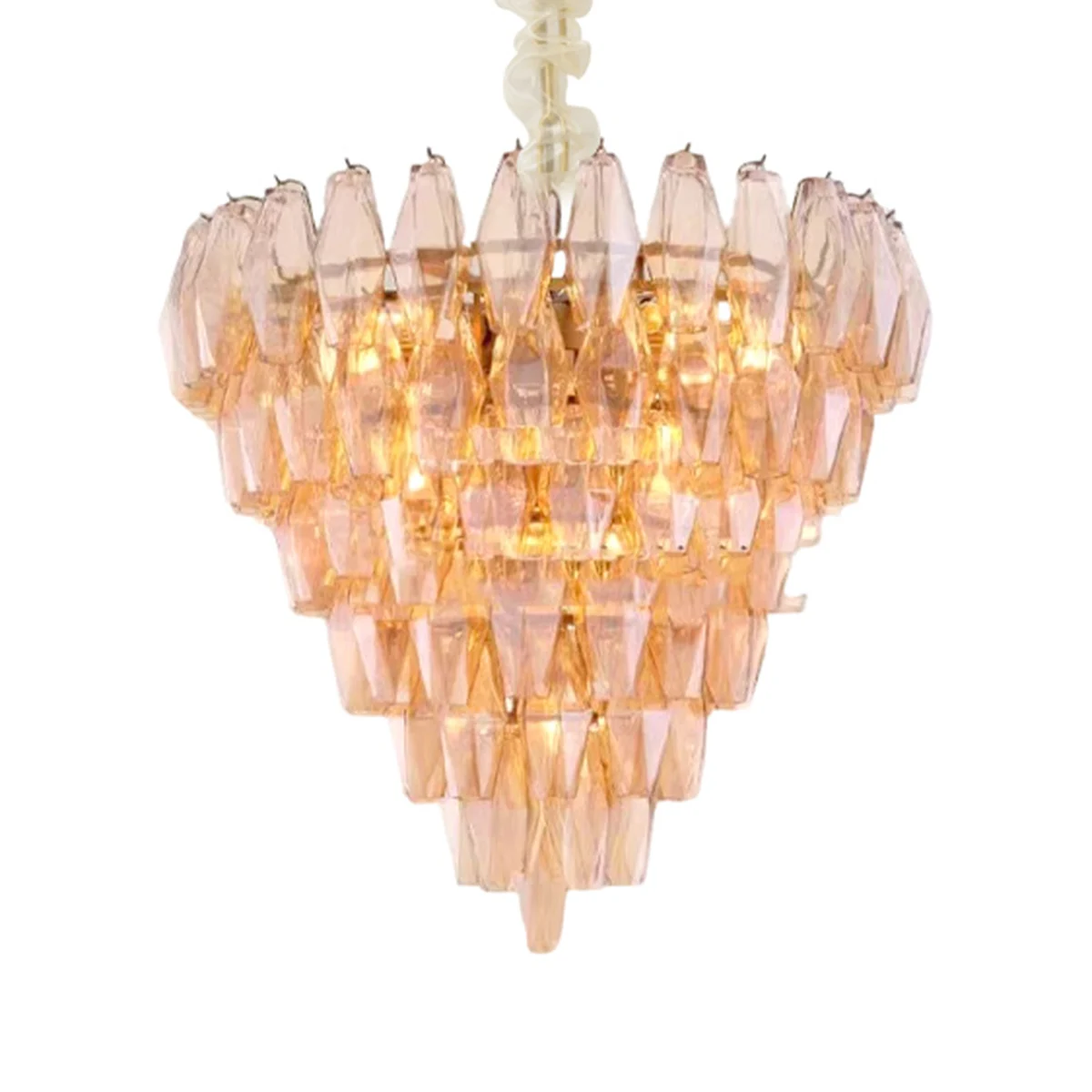
Amber tapered glass · 5690
Faceted amber elements narrow into a tapered body. It offers another way to carry a warm color through a room while keeping a clear vertical composition.
Reference body diameter × height: 500 × 515 mm
Glass tiers: 5
Lamp holders: E14 × 6
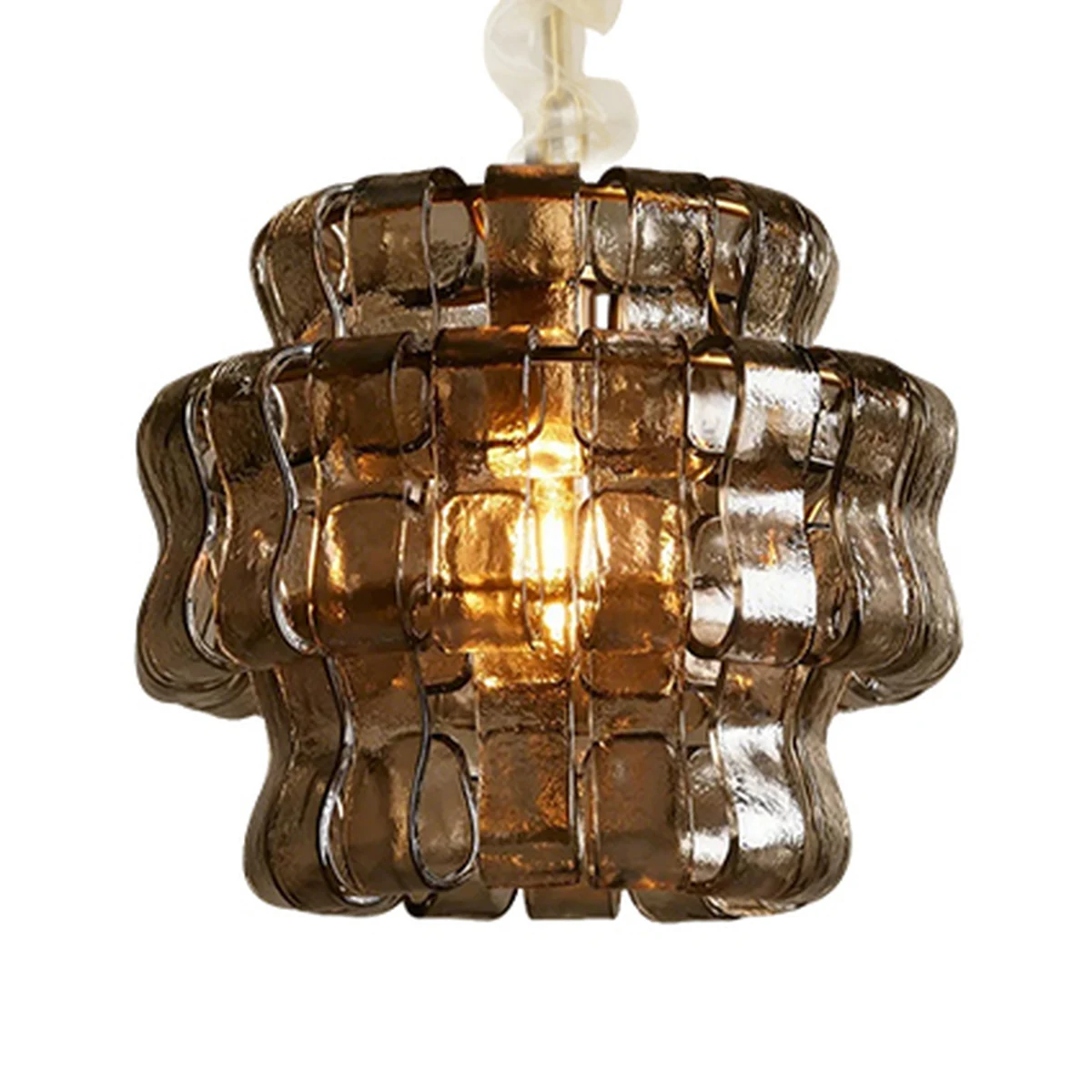
Compact smoky glass · 5693
A small smoky glass body makes a concentrated color accent. Use the dimensions of this specific compact round version when comparing it with a consultation corner or a more intimate setting.
Reference body diameter × height: 330 × 270 mm
Glass tiers: 3
Lamp holders: E14 × 1
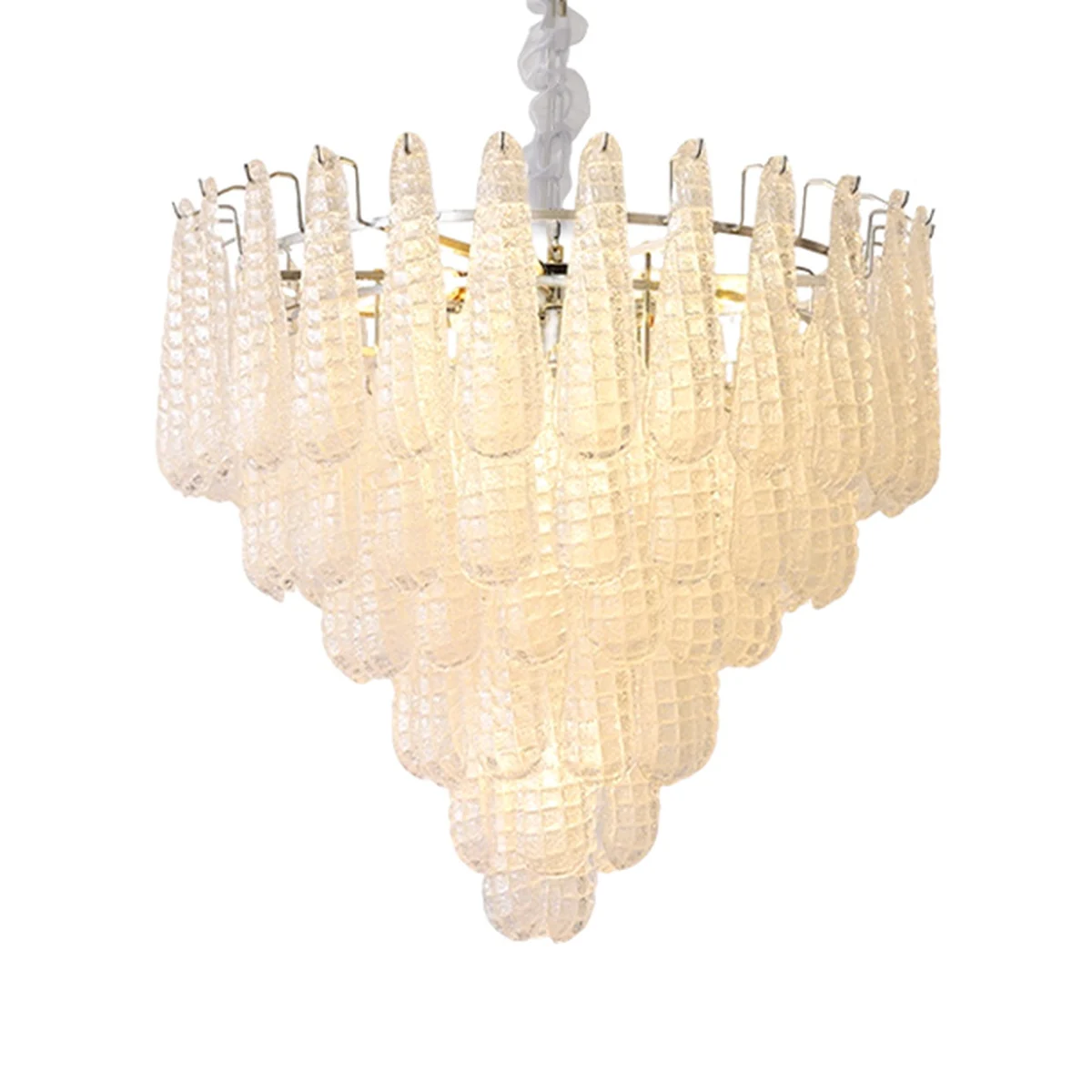
Clear teardrop tiers · 5695
Clear elongated glass elements build a deeper tiered body. Compare its full vertical envelope and transparency with the other materials in the interior.
Reference body diameter × height: 400 × 570 mm
Glass tiers: 3
Lamp holders: E14 × 7
Questions for an expressive lighting choice
Start with the atmosphere and personal references that make the interior distinct, then confirm the precise model, material, size and electrical specification.
How can a chandelier express the character of a space?
Choose one meaningful relationship: a color echoed in an artwork, a repeated geometric form, or a material that contrasts with the furniture. You do not need to match every finish. Bring a small set of interior references so the choice can be judged as part of a particular space rather than as an isolated product.
Which artistic spaces can I consider?
Consider an art-led hotel lounge, gallery salon, independent boutique, design studio or collector’s living room. A restaurant or café with its own visual identity can also be a useful setting. Public-facing projects should confirm the selected fitting’s mounting, electrical specification and relevant market documentation within the project lighting plan.
Are all the designs made from glass?
No. Most designs use glass, while the two cream sculptural options in the gallery are documented as resin with metal frames. Their veined appearance is not a claim of natural alabaster. Compare translucency, surface character and the specific material before confirming your selection.
How should I compare color and sculptural volume?
Look at the body in relation to artwork, walls and furniture. Daylight and lamp color can change the appearance of glass, and a screen image is not a color standard. Review body depth and the complete installed dimensions alongside the preferred color, and discuss samples or current reference material where a close color match matters.
Can I specify a particular color or finish?
Ask about the options for the exact model and size you have selected. A color listed for one design is not automatically available for another. Share a palette or material reference so the current combination can be confirmed; an individual interior concept does not by itself establish a custom manufacturing option.
How do I specify lamps, voltage and dimming?
State the destination market, supply voltage, preferred color temperature and any control system. E14 references describe lamp holders; they do not confirm lamp inclusion, output or dimming compatibility. Ask for those details with the exact design and size.
Can I order one chandelier, and how is it delivered?
Yes. Orders start from 1 piece. Each order is made to order and shipped by sea, with expected arrival in about 60 days. Please contact us for a specific quotation and confirmation of the schedule for your destination.
What should I send for a design and quotation discussion?
Send the selected design, preferred material or color, body size, ceiling height, quantity and destination. Add an artwork, palette, room photo or plan that explains the atmosphere you want. Request the full hanging dimensions, weight, mounting details, lamp specification and current supply quotation.
Give your space a point of view
Share the artwork, palette or interior that inspires you, together with the design you prefer. Add body size, ceiling height, quantity and destination so an expressive idea can become a clearly specified lighting enquiry.